

Trends & Insights from an Industry Pioneer
About Subsurface Reflections:
The goal of this blog is to share interesting and inspiring articles related to subsurface imaging and geophysics. Written by experts in the field of geophysics, ground penetrating radar, software development and data analysis, this is a source for insights about the practical application of technology in the field of subsurface imaging and a place to shed light on common misconceptions in the industry.
No Results Found
The page you requested could not be found. Try refining your search, or use the navigation above to locate the post.
Ground Penetrating Radar (GPR)

Dr. Peter Annan
Founder & CEO
Peter is the CEO of Sensors & Software. His scientific research has been recognized worldwide with numerous awards for his pioneering work in ground penetrating radar (GPR) instruments and data analysis methods. He has authored multiple scientific publications, patents, and technical reports and served on various government and professional committees.
Power Cable Detector PCD | Concrete Slab
Power Cable Detector PCD
When cutting and coring, early warning of the presence of electrical cables in concrete reduces the risk of costly damages and injury. Conquest combines power cable detection (PCD) with traditional GPR responses to provide a new dimension to concrete imaging: two technologies more.
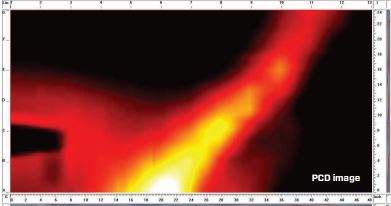
PCD measures the magnetic fields created by current flow in electrical wiring. When wiring is embedded in or beneath concrete, PCD enhances the user’s ability to distinguish electrical cables from other structures.
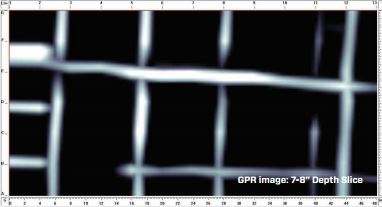
This sheet shows examples of PCD responses, correlated with the GPR depth slices. By looking at both results, users can greatly reduce the number of incidents when cutting and coring. PCD is standard on all Conquest systems.
PCD measures the magnetic fields created by current flow in electrical wiring. When wiring is embedded in or beneath concrete, PCD enhances the user’s ability to distinguish electrical cables from other structures.
Power Cable Responses Examples


